Monday, July 12, 2010

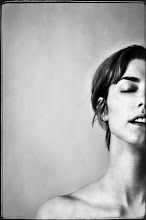
Darkroom Mural Print

Sorry I haven't been posting my art work as much as I should be lately. I have been having great art experiences other than just creating, but I have been creating lots this summer too and I have so much art to post. Sometimes it just takes me a while after I create something to re-photograph it so I can post it. But I took some pictures and will be sharing them here in the next few weeks.


To start with, this is a self portrait I made as part of my BFA show. My BFA show is my senior project that is required for a Bachelors in Fine Art (BFA). I have been working since last December on it and will be showing it this November at Gallery East in Price, Ut. I am really excited about it.
This photograph was taken on a medium format camera called a Hasselblad. The film I used was Ilford Pan 50 which allows for really fine detail and beautiful contrast. I printed it large (30x32 inches) in the darkroom by projecting it onto the wall and then taping mural sized RC variable contrast silver gelatin paper to the wall to make the exposure. This photograph is about knowing you have an important decision to make and confronting your fears about it with confidence. It is about taking the first step towards change.

Sunday, July 11, 2010

Book Review: The Art of Papermaking with Plants by Marie-Jeanne Lorente

And yet another book I have read this summer:


3 out of 5 Stars


The way this book is set up is that there is a chapter in the front of the book discussing supplies and materials needed to create handmade paper. Then it gives instructions on how to make handmade paper. The instructions are basic and easy to follow (of course I think paper making is one of those things that is easier said than done). After the brief introduction on how to make paper, the rest of the book, except for a concluding chapter, has recipes for how to make different types of paper. The concluding chapter features a gallery of working paper-artists and shows the diversity of what contemporary artists are creating with handmade paper. Each artists also has an artist statement and bio.

The recipes in this book are broken up into 4 sections: grasses, trees, edible plants, and non-plant papers. Examples of some of the plants found in this book are: bamboo, wheat, chestnut, elm, artichoke, mushroom, zucchini, and tomatoes. The plants under the edible plants chapter seem to be the easiest to access. Some of the plants aren't even indigenous to America (the book was originally written in French and the author is from France). There are 52 plant recipes.

Recipes include: location for where the plant can be found, when is best to harvest the plant, how to prepare it, how long to cook it for, how much bleach to use, how long to rinse it, the results of the paper (texture, look, etc), and what it can be used for. Some of the paper is so fragile that it can't really be used for anything; it is just to look at.

The thing I did not like about this book was the authors writing style. It was cheesy and random. In the first chapter of the book she gives an introduction about paper-making and the invention of making paper. I found it scattered and uninformative. But when it comes to paper-making she seems to know what she is talking about.

I was interested in this book because I'd like to try printing historic processes on handmade paper. I love the unique look and texture handmade papers offer. Plus, I love using my hands to create. I am not sure how well the emulsion will stick to the paper, but i definitely think it is worth trying. I also want to use handmade papers for image transfers and art books.

Friday, July 9, 2010

Book Review: "Book Art - Handcrafting Artists' Books" by Dorothy Simpson Krause

Here is a review of another book I read this summer:


3.5 out of 5 Stars

This book is focused on the art of book making. Dorothy Simpson Krause seems to be a very experienced book artist. The book is filled with well over a dozen examples of handmade books she has created. With each of these examples she talks about her concept and how and why she did certian things, which is always interesting and helpful for me to hear how other artist work.

Krause covers a lot of ground: altering found/blank books, transferring images and text, book layouts, stitching, and making covers. This is great for an overall introduction to these techniques, but I found that some of the examples and how-to steps weren't as thorough as I would have liked, especially on the stitching section. I wish she had more pictures showing what she is talking about with each step. The pictures are kind of vague. I think if you were a beginner without much experience with bookbinding it might be hard to follow. But if you are familiar with bookbinding and have made a handful of books before, you shouldn't have a problem understanding what is going on and would probably enjoy the book a lot.

Besides the lack of more detailed pictures I found the book comfortable and easy to read. Her writing was conversational and easy to follow.

Overall I enjoyed the book. It had some really helpful tips and creative ideas. It gives a broad introduction to book arts and gives insight to the possibilities available, with great examples. I also found the author to be very sincere and open about her art which is also insightful. My favorite part in the book was an example she gave for gelatin monoprints. She showed how to use gelatin, leaves, and paint to make gorgeous transfers onto book pages. I am really excited to try this technique and can see myself using it often in my own book making projects.

Tuesday, July 6, 2010

Book Review: "Image Transfer Workshop" by Darlene Olivia McElroy and Sandra Duran Wilson

This summer has been a nice vacation for me. I am up in Washington while my husband is doing research at a university here. This has been a great time for me to take a break from school and work, and to be able to do what I want! During this time I have been able to read a lot of books. Because I have been getting so much great reading done, I decided to write up some book reviews. This way I can share these wonderful books I have been finding so many gems in and share it with you!


5 out of 5 Stars

I would definitely recommend this book. It is a very simple to read, straight forward book with a wide variety of techniques to transfer images (35 to be exact). It gives very detailed step by step instructions with each transfer as well as step by step photographs to go with them. It is hard to get lost or confused along the way.

Plus, with each transfer it lists: its limitations (potential issues), the different types of surfaces it works well on (wood, cloth, metal, paper), its archival quality, and the materials you will need. Also, it gives a troubleshooting section with each transfer to help you figure out why your transfer didn't work. I also found it really helpful that at the end of the book they have a list of resources for where you can buy the materials you would need.

They also have a chapter at the end of the book showing how the artists apply these techniques in their own work. For me personally, my style and taste differs from theirs, but these techniques can definitely be utilized to fit my own personal vision and offer great potential to all different styles of art making (photography, book arts, mixed media, painting, fabric arts).

I plan on using a wide range of transfer techniques I learned from this book. I like to use different substrates in my work and so I am really interested in the transfer techniques that can be used on wood, metal, and cloth. There was also a really interesting technique where you use silk tissue to make a transfer that I want to try. Once I get home and have access to all my art supplies I will post an example of an image transfer I make based off a technique I learned in this book.

Monday, June 28, 2010

Cyanotype Photograms


In my last posts I talked a little about photograms. Photograms are made by putting an object (leaves, flowers, strings, toys, cookie cutters, etc) onto a substrate that has been coated with a light sensitive emulsion. The emulsion is then exposed in sunlight and then fixed in photo chemicals. Here are some examples of photograms I did with cyanotype a while ago.

Monday, June 14, 2010

Cloth Cyanotype Book


I am making a small children's book with images of birds. The inspiration for this book comes from the old school Dick and Jane books, with extremely simple text and sentence structure. I printed the images with a historic photographic process called cyanotype. This time I didn't print on watercolor paper though, but on cloth. I really liked using cloth as a substrate. I like the softness of the pages and the texture added to the print. I found it a more appropriate and durable substrate for a children book. I still need to figure out a way to keep the edges from fraying though. Any suggestions of the easiest, cleanliest way to fix my edges? Once I do that, it will be ready for me to stitch up into a book form and it will be done. I enjoyed this project so much I plan on making a few of them to sell.
It was really great using the cloth pages for a book too because it is easier than using watercolor paper. This is because the cloth is already pretreated with the chemistry and I don't have to mix and coat the chemistry on myself. There are two great websites where you can buy these pretreated cyanotype cloth pieces:

http://www.blueprintsonfabric.com

http://www.bluesunprints.com/

The later website even has different colors of cyanotype. If you want a fun, simple art project to do I recommend buying a packages of small squares, a large sheet, a t-shirt, whatever you'd like from this website (if you are into quilting and sewing, this is a fantastic way to get your own distinct pattern to work with. The material is washable). While you are waiting for the cloth to come in the mail, start thinking of some fun shaped objects you would like to use for your art piece. This can be flowers or leaves or maybe something like scissors and paper clips or maybe a paper cuttings you did. Whatever it is, make sure its size is compatible to the size of cloth you ordered. When your cloth gets here, take it out of the package, lay your objects on top of it in direct sunlight. It usually takes maybe 10 to 15 minutes (see instructions that come with purchase). After it has been exposed take it back inside. Give it a water bath for about 5 minutes. Then move it to a second water bath that has a little bit of hydrogen peroxide in it(a capsule or two). It only needs to be in that bath for 15 to 30 seconds. (The hydrogen peroxide in the second bath is optional, but recommended. Using it will give you a deeper, richer blue color in your cyanotypes). Then move it to a final bath and let it rinse for 10 to 20 minutes. Hang or lay to dry. And that is it! You have just created some beautiful art!
I have quite a few upcoming art projects I have been gathering plants for, where I will be making cyanotype photograms. I am very excited to create them! I think plant photograms are very beautiful. For inspiration, enjoyment and a vision of possibilities, yet out this artist (make sure to read the artist statement, it is very well written and gives a wonderful insight to the beauty of creating photograms). Also, check out Anna Atkins work, I highlighted her briefly in the post previous to this one:

James Hajicek and Carol Panora-Smith

I think it is important to support shops like the Blueprints on Fabric store so that they stay open and running. I hope each one of you tries it out. It is a super great activity to do with kids too...at birthday parties, preschool lesson, visit to grandmas, etc. ENJOY!

Thursday, June 10, 2010

New York City and the Many Beautiful Historic Photographs

I went to New York City for the purpose of having an exquisite and rejuvenating art experience. And that is exactly what I got! It was well worth the efforts to get there. I saw some of the most beautiful art from dozens and dozens of the many well known masters of art. It is such a different experience to see these things in person rather than just in an art history textbook.
I would like to highlight some of the amazing, historic photographers whose work I saw at the art museums I went to in New York City (the Guggenheim, Metropolitan and Museum of Modern Art):

Anna Atkins, (1869-1950), Cyanotype Print
Anna Atkins was a botanist/photographer who created the first photographic book ever made, which consisted of photo-grams of plant life using a cyanotype printing process. The book is titled "Photographs of British Algea: Cyanotype Impressions." I had the opportunity to see a sample page from her original book.


Julia Margaret Cameron, (1815-1879),Venus Chiding Cupid and Removing His Wings, Albumen Print
Julia Margaret Cameron is one of my favorite early photographers. She was very ahead of her time and a great pioneer in creating artistic photography. Her work is well worth looking into; she has some really beautiful creations.


Roger Fenton, Rievaulx Abbey Yorkshire, 1854, Process Unknown
Roger Fenton is an early photographer who is most famous for photographing the Crimean War. He also did a lot of architectural photography. The Metropolitan Museum had a print of his on display. Unfortunately, I do not remember the exact image I saw there because it is one I wasn't familiar with it. But it was a landscape/architectural photograph, instead of one taken from the Crimean War. I like his landscape/architectural images better than his war photographs.


Anne Brigman, (1869-1950), The Wind Harp, Platinum Print


Gertrude Kasebier, (1852-1934), Blessed Art Thou Among Woman, Platinum Print


Imogen Cunningham, 1925, Magnolia Blossom,
Platinum Print

All three of these artist are American Woman who belonged to a group called the Photo-Secession. This was a group of photographers who fought for photography's acceptance as an art form. They approached their art with a more pictorial, soft, moody feel. I really, really enjoy this style of photography both for the philosophy behind the group and also for more dreamlike, emotional feel to the photographs.


Irving Penn, Large Sleeve, 1951, Gelatin Silver Print
Classic, inspirational, talented portrait photographer - known as one of the best! About 12 to 15 or so of Irving Penn's original silver gelatin prints were on display at the MOMA and they are all gorgeous prints.


Henri Cartier-Bresson, Hyeres, France, 1932, Silver Gelatin Print
Henri Cartier-Bresson is known as the "father to modern photojournalism." He is most famous for his photographic philosophy "the decisive moment." The best way I can think of to describe this concept is in Henri Cartier-Bresson own words: "There is nothing in this world that does not have a decisive moment...Photography is simultaneously and instantaneously the recognition of a fact and the rigorous organization of visually perceived forms that express and signify that fact." (Quote cited from Wikipedia).
Currently at the MOMA they have an entire exhibit of Henri Cartier-Bresson's photographs. There is easily over a hundred on display. It was an incredible experience to be able to make it over there and see the exhibit.
My entire art trip to New York City was absolutely amazing and I can't wait to go back! What a wonderful thing that there can be so much beautiful art all in on city.
I have one last artist I want to highlight: William Kentridge. He was actually my favorite part about my entire trip. I liked his show the very best. He isn't even a photographer. He's actually best known for his animated films. He has done a lot with theater and film. He also does printmaking, paper-cutting, and charcoal drawings. Hope you enjoy, unfortunately these small internet images don't even do it close to enough justice...at all! His work is breathe taking in person, but this will give you an idea of his style of work:

Drawing From Stereoscope 1998-99, Charcoal, Pastel, Color Pencil on paper


Title Unknown


Music Box Tondo, 2006, Archival pigment print on Hahnemuhle German etching paper

What I like about William Kentridge's work is the sense of humility that is offers. It is simple, rough, depends greatly on contour lines and has a moody edge to it. He has a large variation in his work, yet it all holds a distinct signature of his style. I can tell that thought, concept and effort were put into each piece. I relate to it on a raw human nature level, if that makes sense? Anyways, I learned a lot about my own art work and got a lot of great ideas from viewing his show. He has a gigantic exhibit going on at the MOMA right now. He filled rooms and rooms all with his own work. That really impressed me.
What are your thoughts and critic on his work, and the other artists I have shared?